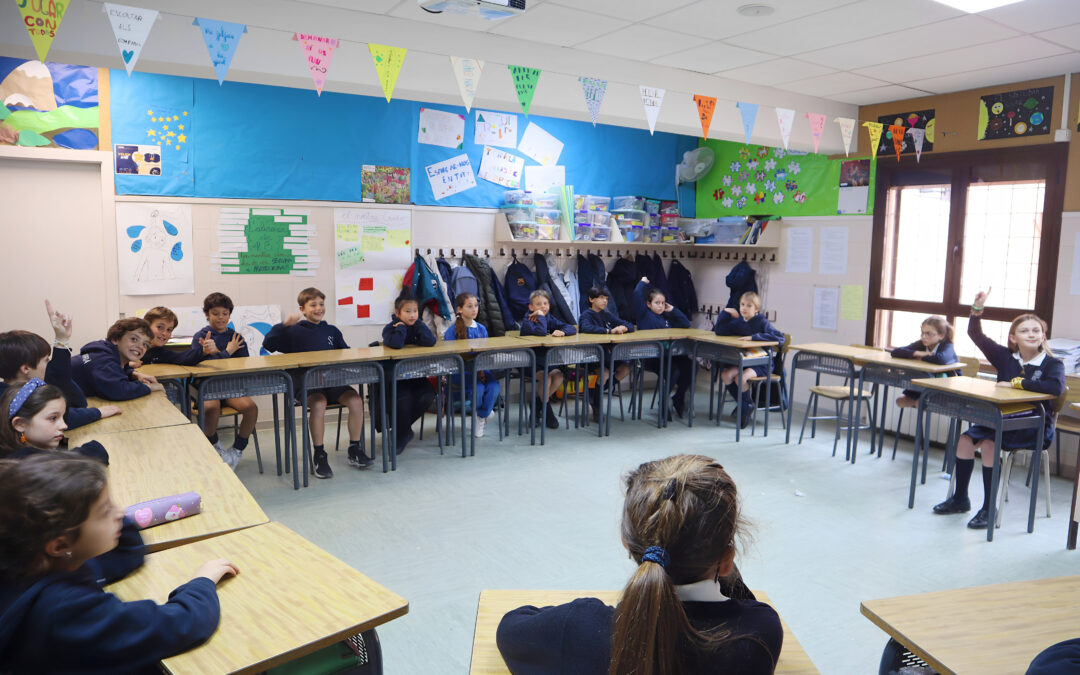
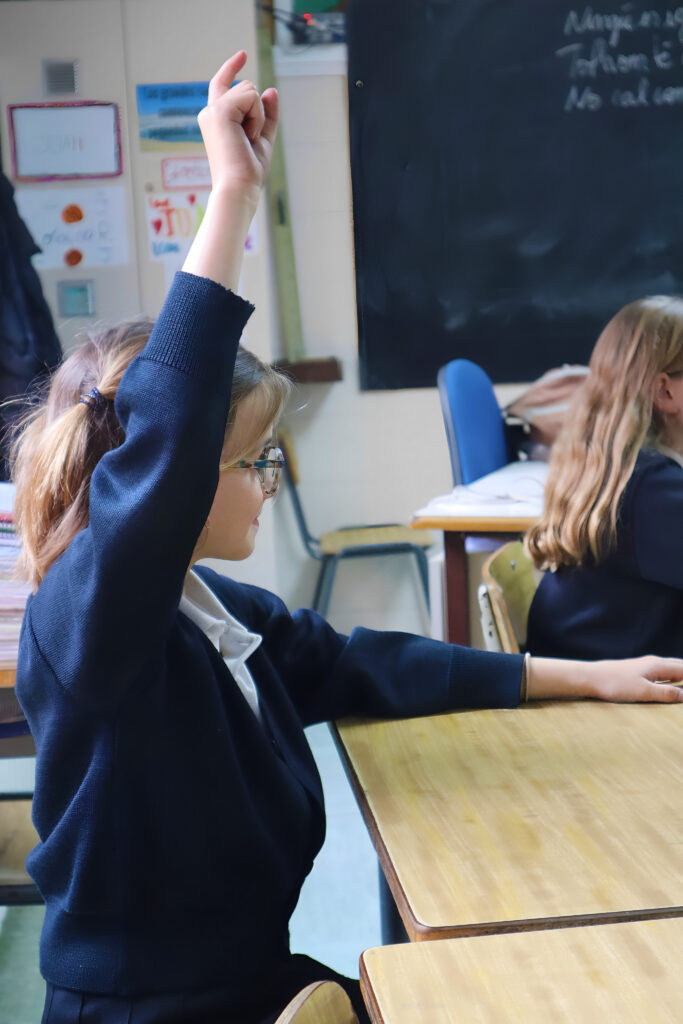
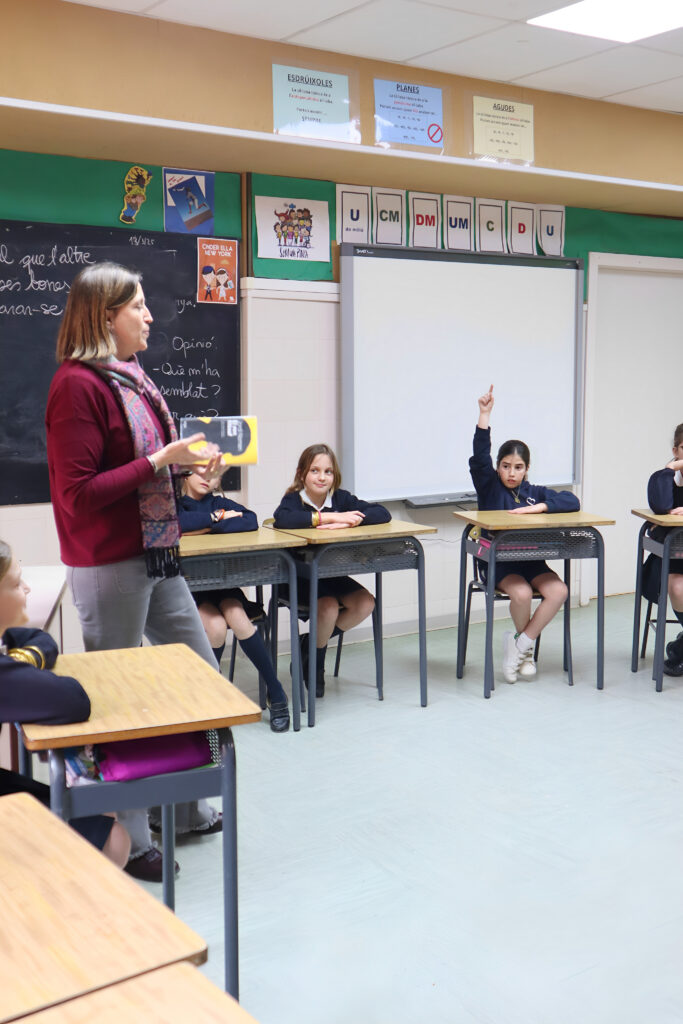
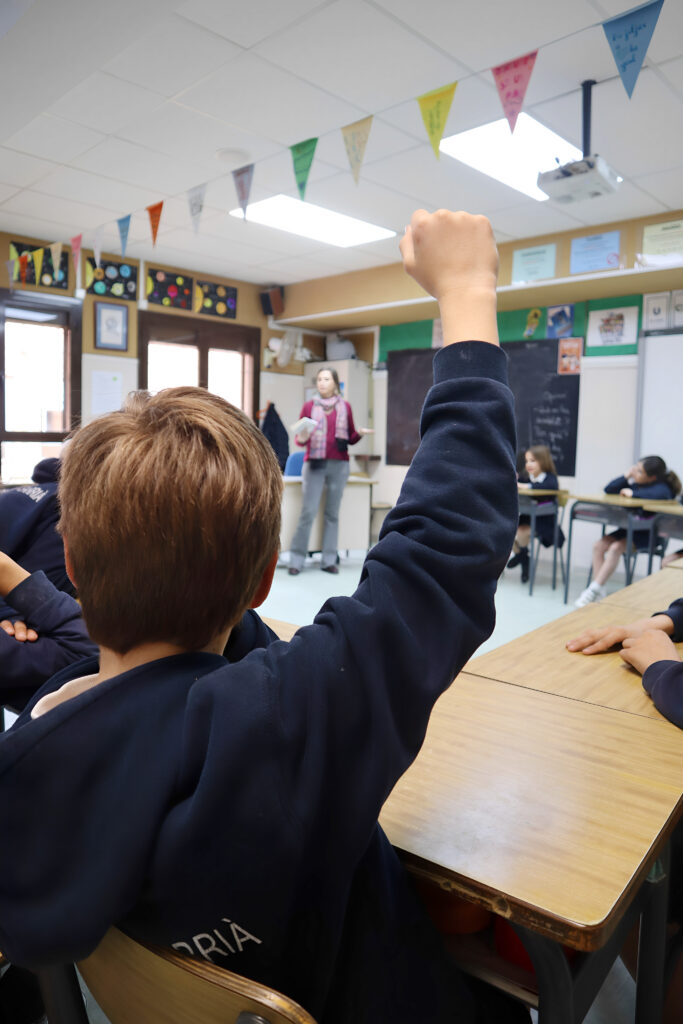
A primària treballem la filosofia com una eina per ajudar els infants a expressar les seves idees, escoltar els altres i comprendre que el que cadascú pensa és important. A través del diàleg i la reflexió, fomentem el pensament crític i la confiança en la pròpia veu.
Cada curs dedica una hora a la setmana a conversar sobre temes rellevants i propers per als infants, com l’amistat, la justícia o les emocions. A vegades els temes són més abstractes, fan activar el seu cervell i desperten la seva creativitat i imaginació. Utilitzem contes, preguntes obertes i dinàmiques de grup per estimular la curiositat i la capacitat de raonar. En aquestes sessions, no hi ha respostes correctes o incorrectes, sinó punts de vista diferents que ens ajuden a pensar millor.
Un aspecte clau és l’escolta activa: aprenem a respectar les idees dels altres i a argumentar amb respecte. Això crea un ambient on tots se senten valorats i comprenen que la seva opinió compta. A més, fomentem una mentalitat flexible, ajudant-los a veure que poden canviar d’opinió si descobreixen noves perspectives. L’escolta activa ha de ser present a l’escola i a casa. Per això, en l’àmbit familiar cal trobar moments de diàleg i de conversa on l’infant pugui expressar i compartir els seus pensaments convertint així una estona d’intercanvi d’opinions entre petits i grans.
D’aquesta manera, els infants guanyen seguretat en si mateixos i aprenen a expressar-se amb claredat i respecte. Així, es preparen per afrontar els reptes de la vida amb criteri i confiança. La filosofia els ajuda a crear unes bases per a una ciutadania activa.
Els alumnes de 2n de Batxillerat que s’atreveixen a descobrir la matèria d’història de l’art no només aprenen sobre moviments artístics i artistes reconeguts. A classe troben un espai que els permet entendre el món des de múltiples perspectives: històrica, filosòfica, psicològica, sociològica…
Així mateix, desenvolupen el seu pensament crític i obren la mirada a diferents autors i autores amb l’anàlisi de les seves obres, també fomenten la creativitat i poden expressar les seves emocions amb les propostes i treballs que realitzen al llarg del curs. Per exemple amb “La Transformativa”, en què han d’utilitzar la realitat i transformar-la en una expressió artística que els remou o defineix.
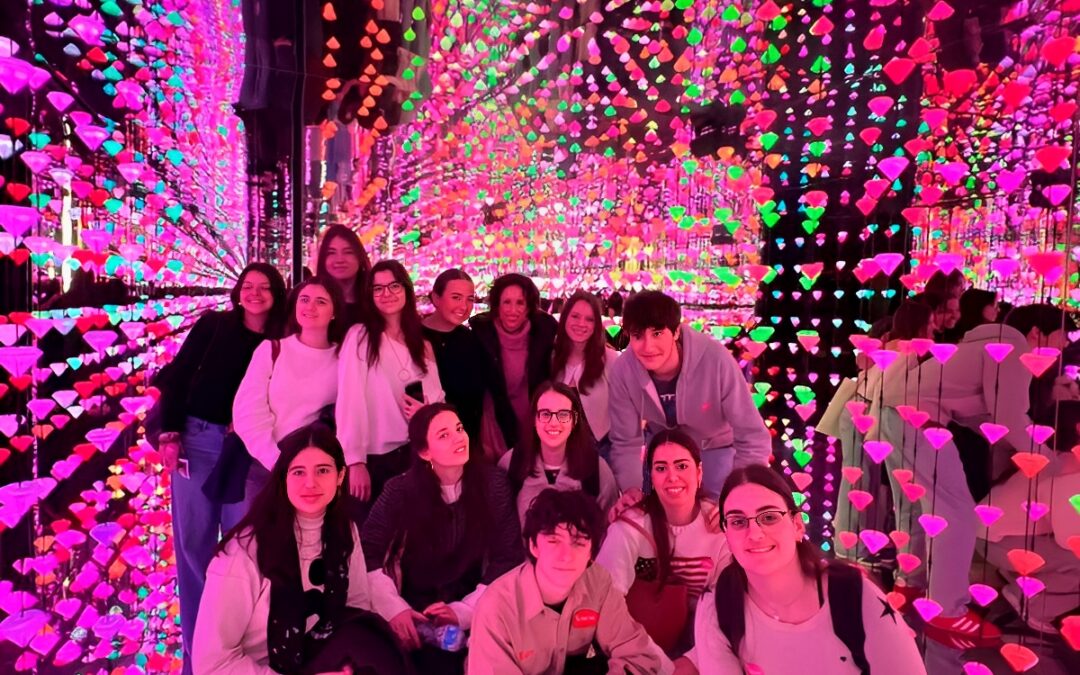
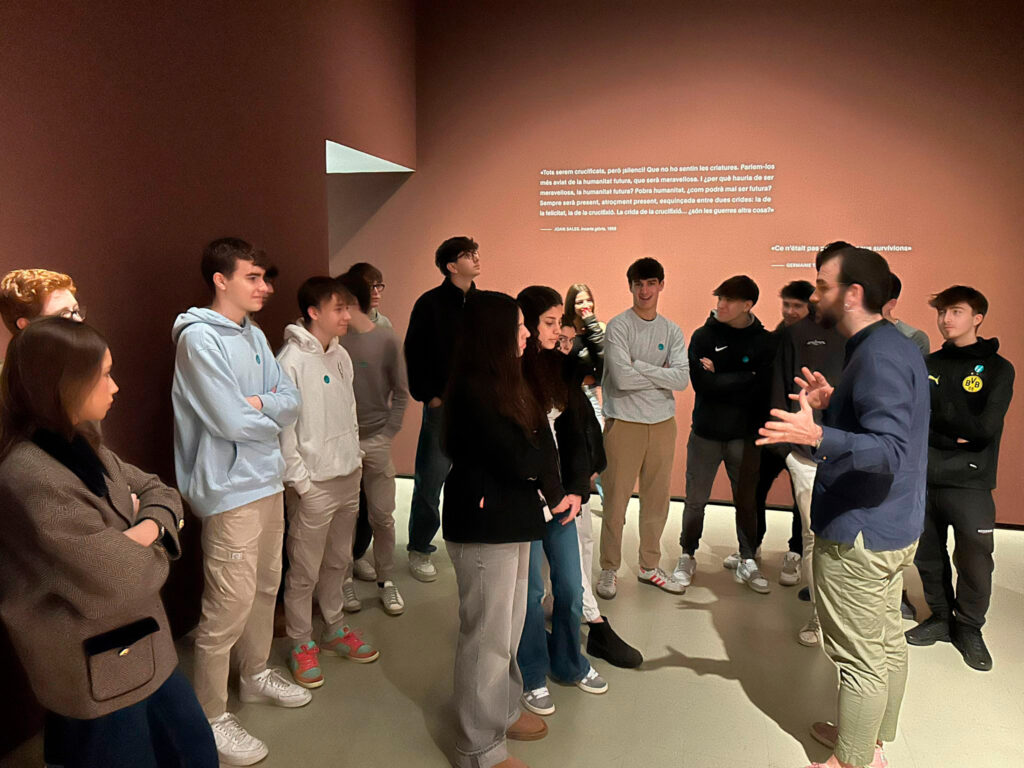
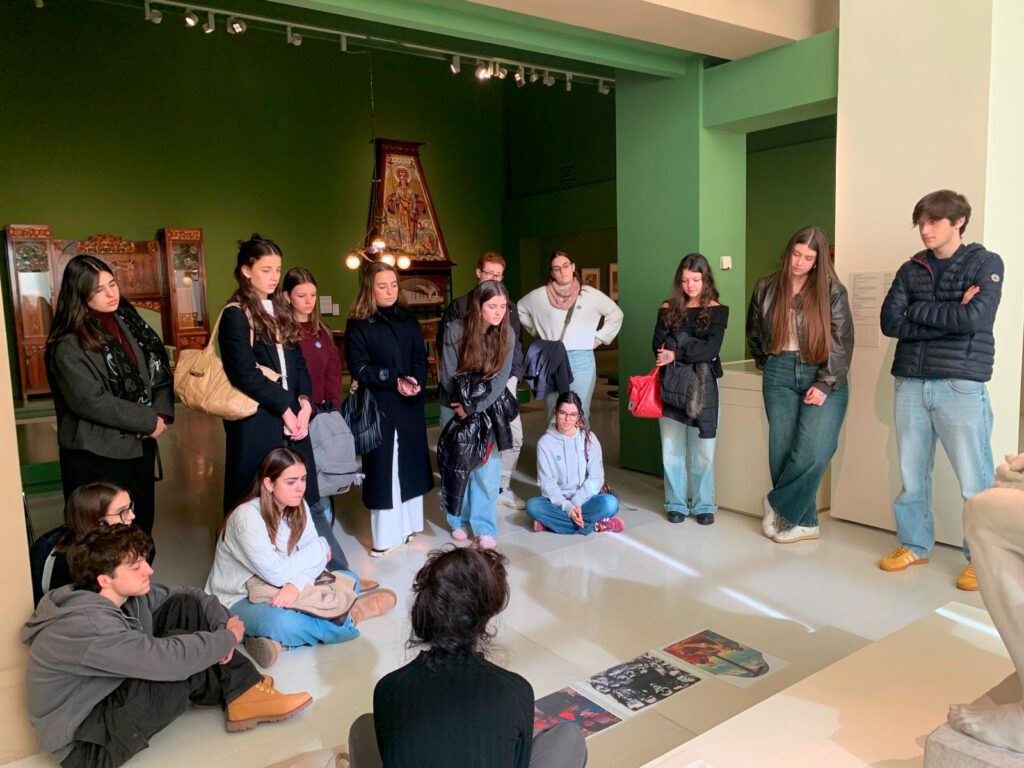
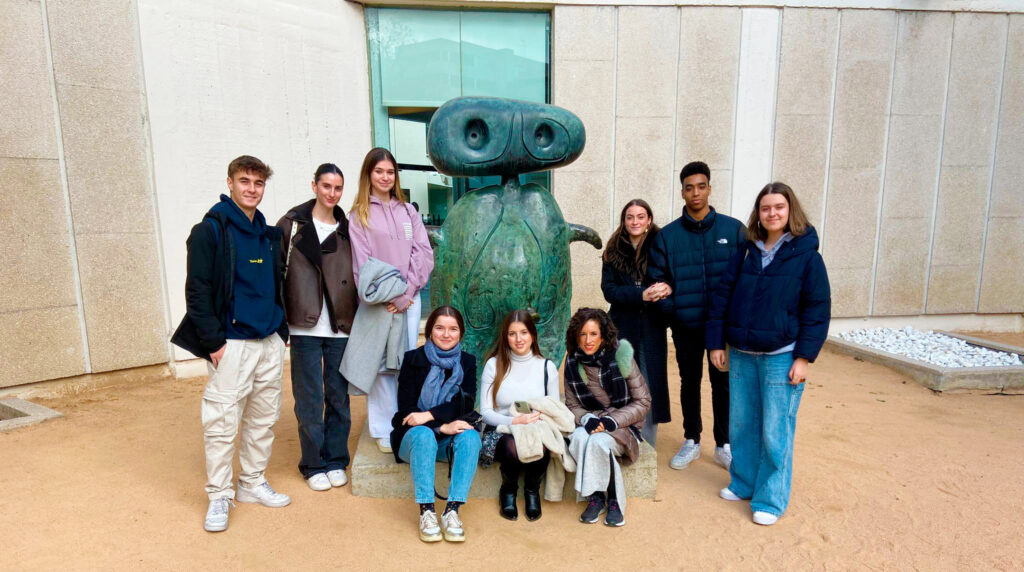
Però aquesta assignatura no s’ha quedat dins l’aula (no pot), per això es fan visites com la del MNAC on van poder acostar-se a artistes tan reconeguts com Lluïsa Vidal, Marià Fortuny o Gargallo (entre molts altres) o la del MOCO BCN, un museu independent d’art modern, contemporani i de carrer que permet entrar en contacte directe amb les avantguardes del moment.
Personalment, no només crec que l’assignatura m’aproximi més a la cultura i al patrimoni o m’ensenyi noves obres i tècniques sinó que també m’ha ajudat a adquirir pensament crític. A nivell personal, les sortides que realitzem durant l’any m’han servit per gaudir de l’art que tenim prop de casa i m’ha fet adquirir curiositat per visitar exposicions pel meu compte. Estic molt agraïda d’haver triat aquesta assignatura perquè són classes dinàmiques amb les quals pots aprendre i alhora reflexionar sobre el món de l’art. I amb els projectes he pogut desenvolupar la meva creativitat i observar on no ho havia fet abans.
Aina del Pino
Conèixer l’art no només és important per tenir cultura general, sinó que a més ajuda a admirar les obres i veure-les des d’una perspectiva diferent. Quan una persona que no sap d’art mira una obra, només veu un dibuix que li sembla maco (o no). En canvi, sabent sobre el tema, es pot anar més enllà en l’estil, la tècnica i també el tema i el significat.
La diferència entre saber i no saber es veu sobretot en les obres que no busquen la bellesa, ja que si una persona que no s’ha informat mira una obra contemporània, com pot ser Maman, potser la troba lletja i la rebutja, però si descobreix tot el simbolisme que hi ha darrere, la veurà completament diferent.
Belén Cases
Esta asignatura aporta un amplio conocimiento a través de la historia y ayuda a conocer los conceptos y costumbres de las gentes de la época, así como su percepción de la belleza.
También es una asignatura con la que no solo tienes que estudiar, lo cual es fundamental, sinó que también te permite disfrutar mucho de ella.
Sabíeu que a Educació Infantil tenim un blog? Doncs sí!
Amb aquest espai pretenem donar veu a les professionals de l’educació i ser un instrument útil per a les famílies, per ser coneixedors de totes les coses que es fan a l’escola. També hi podeu trobar consells pràctics per aplicar a les vostres cases, com per exemple: com treballar les rebequeries, recomanacions de lectures pels més petits, què fer davant l’arribada d’un germanet petit a casa, de quina manera es treballen les normes i els límits…i un munt de coses més!
Aquestes entrades al blog les anem publicant setmanalment i som nosaltres, les mestres d’Educació Infantil de 0-6, les responsables de fer-les. També, anem combinant les tres llengües: el català, el castellà i l’anglès, amb la intenció d’arribar a tothom.
Ja veieu! A més a més d’estar amb els vostres fills, també tenim traça per a escriure! I no ho fem pas malament, no creieu?
Molts de vosaltres, pares i mares, ens heu agraït aquest canal de comunicació i gràcies a això continuem amb el projecte. Creiem bàsica la comunicació entre família i escola i aquest canal facilita aquesta funció tan important. Ja us ho diem, sovint, en moltes de les primeres trobades que fem amb vosaltres: sempre que ho necessiteu, qualsevol problema que vulgueu tractar, podem parlar-ho. Amb aquest canal també volem desenvolupar una veu pròpia, la veu que representa a totes nosaltres, el claustre d’INFANTIL.
Estem molt satisfetes amb els resultats i espereu, que això només acaba de començar!
Pels que encara no ens coneixíeu us animem a entrar-hi, reflexionar, pensar o simplement fer una lectura tranquil·la de tot allò que creiem important com educadores i que és rellevant i significatiu pel desenvolupament integral dels vostres fills, els nostres alumnes.
Aquest mes de novembre, els alumnes de 2n de Batxillerat de l’assignatura d’ODS han aprofundit en un dels grans desafiaments del nostre temps: el negacionisme i la desinformació al voltant del canvi climàtic.
En una primera fase, els alumnes van analitzar les fake news, aprenent a identificar i contrastar informacions de fonts amb diferents graus de fiabilitat. Aquest treball crític els ha permès desenvolupar habilitats per navegar amb criteri en l’entorn digital i separar fets de desinformacions.
A més, van recuperar i revisar la seva participació en les Jornades contra l’Emergència Climàtica del 2021, organitzades per l’Ajuntament de Barcelona. En aquella ocasió, els estudiants van presentar una campanya de sensibilització centrada en l’ecoansietat, aportant propostes per afrontar aquest fenomen amb resiliència i accions positives.
El punt culminant de l’activitat ha estat el desenvolupament d’una nova campanya per combatre el negacionisme climàtic. Els alumnes han creat materials en diversos formats, combinant dades científiques amb missatges clars, realistes i visualment atractius. L’objectiu no només era informar, sinó també inspirar, promoure la consciència ambiental i fomentar l’esperit crític entre els seus companys i la comunitat educativa.
Aquest projecte ha estat una oportunitat per posar en pràctica valors essencials com el compromís social i la responsabilitat global, i reafirma el paper clau de l’educació en la lluita contra el canvi climàtic.
Al cicle formatiu de grau superior d’Educació Infantil del SCS apostem per formar els nostres alumnes com a educadors del present i del futur. Partint del món canviant on vivim, oferim l’especialització en Atenció a la Diversitat. A través de la teoria treballada a classe, les ponències de diferents professionals externs i les col·laboracions, proporcionem les eines bàsiques per actuar en diverses situacions.
La nova llei educativa aposta per un enfocament competencial i per la personalització dels aprenentatges. Aquest enfocament es materialitza mitjançant aprenentatges que els seran útils per al seu futur com a professionals de l’educació, on la individualitat, la diversitat d’interessos, motivacions i capacitats són la base per oferir una educació de qualitat i inclusiva.
Gràcies a les col·laboracions que fem amb Nadís i amb l’etapa d’Educació Infantil de l’escola, els alumnes poden viure la diferència com un aspecte positiu i trobar maneres adequades de respondre a la diversitat, tant en espais lliures, com el pati, com dins de l’aula.
Aquest lloc web utilitza cookies per millorar la vostra experiència mentre navegueu pel lloc web. D’aquestes, les cookies que es classifiquen com a necessàries s’emmagatzemen al vostre navegador, ja que són essencials per al funcionament bàsic del lloc web. També fem servir cookies de tercers que ens ajuden a analitzar i entendre com utilitzeu aquest lloc web. Aquestes cookies s’emmagatzemaran al vostre navegador només amb el vostre consentiment.